Let's start with the basics.
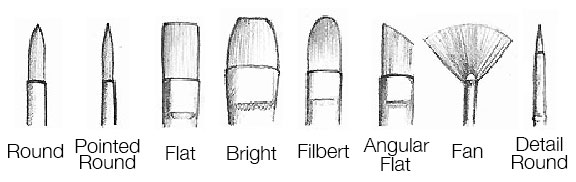
Each brush has it's purpose. The Round is good to use when creating thin marks such as filling in spaces or just adding detail to the painting. The Point Round is also very well used for adding detail and retouching your piece but the strokes are much more thin. The Flat and Bright brushes can both be used to create heavy strokes except the Bright brush would probably be used better up close rather than just applying the paint all loosely like the Flat Brush. The Filbert can be a combination of both a Round brush and a Flat brush because of it's thin point and because of how flat the bristles are. The fan brush however can be able to create unique strokes. It can be able to apply hair-like strokes and textures on the picture for leaves on a tree, or on a cloud in the sky. The angular flat can be able to create curved strokes, and is able to fill in spaces like all the other types of flat brushes. Then lastly, the detailed brush does what is named. It gives details to the paintings for it's small amount of bristles it has at the end of the brush.
These are just a few out of many types of brushes. These are just here to start you off when creating your piece for the first time, or your second, or to refresh your memory in what the most common types of brushes do. Make sure to get the ones you need to create your piece, and you'll be just fine :)

OMG my dad has all of those
ReplyDelete