Sunday, January 22, 2017

I Physically Can't Draw

  All artists that strive to become better artists have once reached a point of frustration. Frustration, in which they think they can not create an art work correctly. They keep erasing and erasing and think they will never become better. I can relate to this and I think many artists can too. It feels like giving up would be the best option. I should say this now, giving up is not the best choice if becoming better is something that they are passionate about. I know some people that have accomplished any obstacle that have been thrown to them.
  Everyone knows Pablo Picasso as a famous artist. He as well had some obstacles to go through. He suffered with Dyslexia. Dyslexia is the switching of letters and words in the brain which causes a difficulty in reading and writing. In his early years, he did poorly in school but he still created amazing paintings.
   Although Picasso suffered through a mental illness, some have to fight with a physical disability. In Norfolk, Virginia, there lives a  man named Peter Longstaff. As well as Picasso, Peter is a painter but he paints a little differently. When he was born, he was born without arms and was put at an advantage. He then adapted and created beautiful landscape paintings such as these.

Clouds - Peter Longstaff 

He didn’t let his disability get to what he loved doing.
  Another well-known artist much younger than Peter is Mariusz Kedzierski. He is a 23 year old, self-taught artist who began to love art at the age of three. He learned how to draw and paint at the age of 12 without having any arms, until he was forced to stop for medical reasons. He felt like he couldn’t paint for the rest of his life. He used his portraits to communicate his pain of his disability. Until 2008, he had a life changing surgery that gave him the ability to draw again. He draws by holding his pencil against the ends of his arms. He creates beautiful drawings such as these.
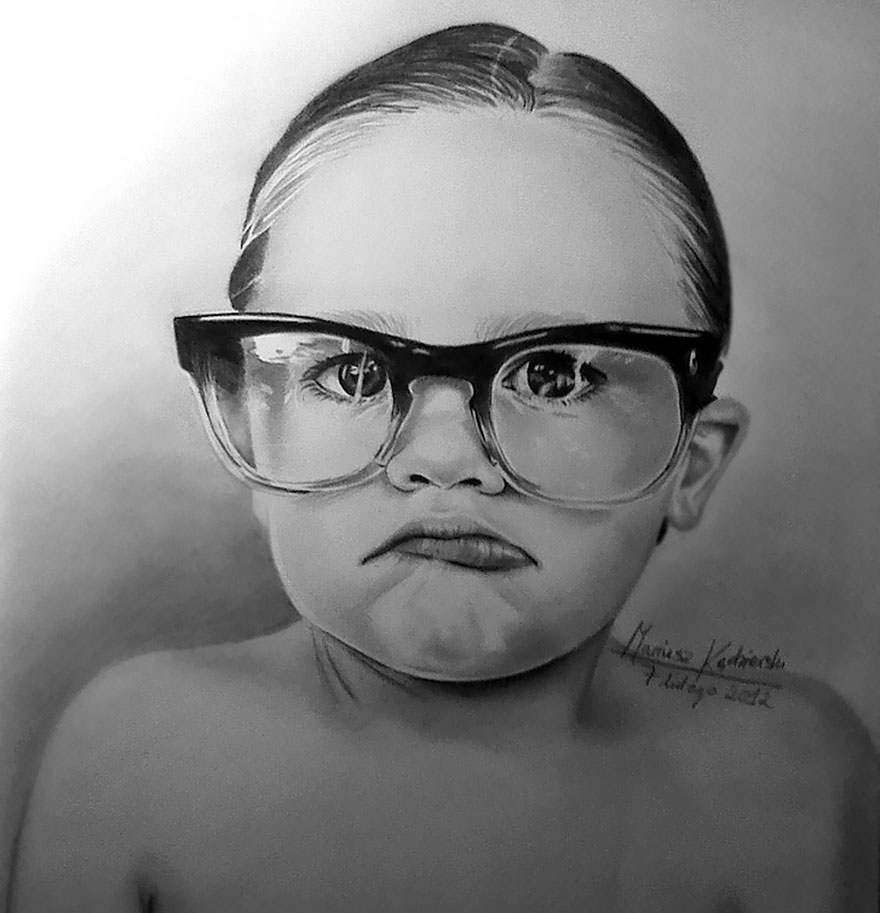
He won second prize in “Best Global Artist” in Vienna in 2013. “It’s not difficult to be an artist or whoever you want to be if you truly believe that you want to do it. Then nothing stops you. For me, a disability doesn’t mean that I can’t live my own, great life.” He says. He didn’t let the disability of having no arms let him down. He still continued and created amazing, realistic drawings.
  No matter what obstacle an artist is in, they should take a moment and realize that they truly can do it if they keep trying. These artists have and why can’t they? So if you’re struggling, don’t worry. You’re not alone, we’ve been there and I know you can still accomplish it. Good Luck

Saturday, January 7, 2017

24 Different Colored Waxes!

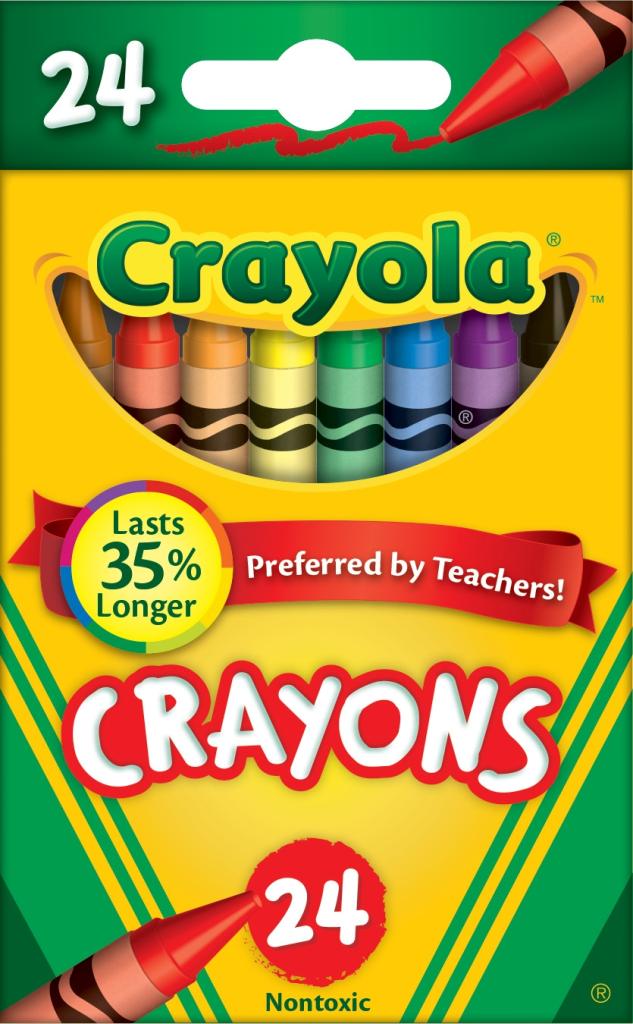
   One of the most remembered tool in people's childhood is their trusty crayon. A crayon is a pencil/stick of colored chalk or wax that's used for drawing or coloring. Crayons are mostly used for coloring pages or books in which many children have (If they don't have a tablet yet). The most common brand of crayons that people are familiar with is Crayola, but that wasn't the first true crayon invented.
   Encaustic Painting is the latest technique dated all the way back to the Greeks. Encaustic Painting is a wax based paint that consists of beeswax, resin (crystallized tree sap), and pigment. Heat is used to activate the paint in which the artist applies on the canvas (preferably wood) with the brush of their choice. Layering is the most common technique used for encaustic painting for it's translucent strokes. Pastels were then used commonly in the 18th Century by many artists. Pastels are similarly related to crayons based on their shapes and size. They both come in a variety of colors and have pigment substances mixed with other materials to keep it's shape. Then finally on March 31, 1885 in New York City, Edwin Binney found "Crayola". Crayola is the most common brand that we know today that provides us with markers, crayons, etc.


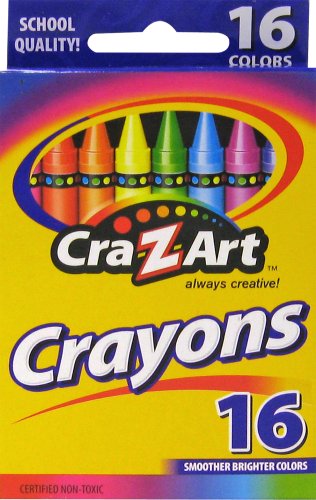
   There are other types of crayon brands out there. Some don't compare to Crayola because of their lack for advertisement and quality but they still exist. I quickly checked reviews on Amazon about what people thought for each brand I chose (Crayola, Cra-Z-Art, Prang, RoseArt, and Scholastic). Out of 311 people, Crayola got 4 and a half stars (out of five)
Cra-Z-Art (out of 139 people) received a 4.1 stars out of 5
Prang (60) received 4 out of 5
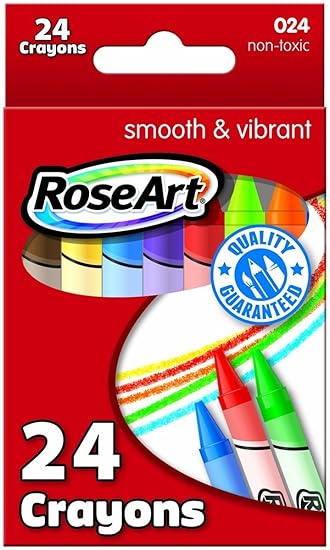
RoseArt (23) received 3 and a half out of 5 and
Scholastic received 4 and a half out of 5 by 16 people. 
  These numbers might not reliable. Especially since RoseArt and Scholastic were only reviewed by 23 and 16 people. So I chose to compare the two different types of brands by coloring them on a sheet of paper and evaluating them after I finished. I chose Crayola and RoseArt for the lack of information that RoseArt had of its quality. When I finished, I came to the conclusion that Crayola was the best choice because of its great balance between wax and pigment. It was easy to control because I didn't need to apply any pressure for it to color the way I wanted it to. They don't break easily either. On the other hand, RoseArt had a higher portion of wax than pigment so I wasn't sure how the coloring was going to come out when I finished. It's much easier to break. They both do their job for a good price but Crayola would be the better choice.
   Now unless you're very picky about the type of crayon you use, it doesn't really matter what type of crayon brand you choose. Children don't mind what the crayon brand the crayon is, just as long as they can color their coloring book with it. It's very curious to know how the crayon came to be and how it affected our childhood in the long term. Some crayons are better than others but you still have the choice of choosing the best crayon for you.
Crayon Art

OUCH

   Tattoos seem as scary as they look getting them. Especially knowing that ink is being injected into your skin forever makes them even scarier. No matter how painful it may look, tattooing is a different type of art style with different types of techniques. It may not seem like it but, why do you think the people who create the tattoos are called "tattoo artists"? They all have their different tools, and there are different types of way to use them.
   Every tattoo artist needs their tools. They need a machine that resembles a dental drill called a tattoo machine. It requires a  sterilized solid needle that goes up and down, puncturing the skin at around 50 to 3,000 times per minute by a machine that draws ink into the needle. Each time it enters the skin, the needle enters by a millimeter and adds a little bit of ink. What keeps the machine running is an electric motor that requires a foot pedal that control the vertical movement of the needle. There are more needles to be mentioned but they depend on whether what tattoo the costumer is getting. These are just the basic tools that a tattoo artist needs.
   The video above is to show how tattoo needle(s) looks close up when they puncture the skin repeatedly.
   First the artist has to outline what they will be creating. It's to create a basic shape on the skin. It's normally done with a group of needles as shown on the video above. You can view outlining (or lining) as a way to create a coloring book on their skin.
   They then start coloring the tattoo itself. Most people use a series of small overlapping circles to fill in a space of skin. They may also sweep the needle across the skin with a variation of pressure to create a "shading effect" on the tattoo. Coloring can also be very crucial to creating a tattoo. Coloring is mostly done from darkest to the lightest colors. Since the needles have to be cleaned between colors, imagine using a paintbrush. If the paintbrush was used for black and then used again to color with white, both of the colors would smear no matter how hard the artist tried to remove black from the paintbrush. It was hard to remove because black is a dark color. Especially if the artist wants to use a bright color afterwards. The tips of the needles are treated the same. Each time the artist wants to switch between colors, they would have to completely clean the tips of the previous color. Coloring from darkest to lightest also ensures that they don't mix.
   Shading is a little different to what others are use to. Almost all tattoo artists use black ink for shading. One way to apply the ink for it to appear "darker" or create a "shade" is to apply variation of pressure between the strokes. The variation of pressure can add the effect of a lighter or a darker shade. Another way to create shade is to add white with the black ink so that there can be a grey color/shade on the tattoo. Some also add water to the ink to create a lighter shade of color from the ink. It's very unlikely to add water however because adding water into ink would irritate the skin. Shading can be very crucial when it comes to a good tattoo artist or not. It really shows the depth of the tattoo and makes it interesting to look at. Shading would be the best
   Creating tattoos require a lot of work and precision, and so does a painting. I consider Tattoos to be art that can be placed on human skin forever and for everyone to see. The tools and techniques might seem different but drawing and painting are completely different compared to each other. I say tattoos lie right in between them. There might be other types of techniques out there but now you"ll know how to create a tattoo correctly! (Just don't practice on anyone please....)
Goodluck!
Landscape Tattoo